MySQL & MariaDB
Two related systems,
one operating model
MariaDB began in 2009 as a fork of MySQL and has stayed largely compatible. Which of the two runs is usually dictated by the application — we run both the same way.
What the two systems are built for
MySQL is the relational database a large share of web applications sits on — content management systems, shops, line-of-business applications. The InnoDB storage engine brings transactions, foreign keys and row-level locking; replication is part of the standard feature set.
MariaDB emerged in 2009 as a fork of MySQL and is developed further by the MariaDB Foundation under the GPL. Compatibility has largely been preserved, so many applications run unchanged; in some areas — additional storage engines, or the Galera cluster variant — MariaDB goes its own way.
Which of the two is used is in practice almost always dictated by the application. For running it, it makes no difference to us.
In common
- Relational, SQL
- Transactions via InnoDB
- Replication built in
- Open source
- Broad tooling support
Different
- Development and licensing model
- Additional storage engines in MariaDB
- Galera cluster variant in MariaDB
What we take on
The scope matches that of the other managed systems. What belongs to it in your case is set out in the quote.
Provisioned on its own VM
The instance runs on its own virtual machine with guaranteed resources, separate from the application server if you want it that way.
MoreMaintenance and security updates
We keep the operating system and the database software current. Version jumps are agreed with you in advance.
Monitoring and fault resolution
24/7 monitoring. Which response times apply is set out in the contract.
MoreBackups as agreed
Backups are taken while the database is running, and they are consistent — it does not have to be stopped. Frequency and retention we agree together.
MoreFrequently asked questions about MySQL and MariaDB
How do MySQL and MariaDB differ?
MariaDB emerged in 2009 as a fork of MySQL and has stayed largely compatible — many applications run unchanged on either. The differences lie in how they are developed and licensed, in a few additional storage engines in MariaDB, and in the Galera cluster variant.
Can I move my existing database to you?
Yes. We handle the move as a project of its own, billed by effort: we look at the size, the acceptable downtime and any change of version, and tell you what it costs before we start.
What does a managed MySQL or MariaDB instance cost?
The price depends on the resources of the VM and on the scope of support, and it is stated in the quote. There are no licence fees for the database itself — both systems are open source.
Do you also run the database in a highly available setup?
Yes. We set up and run primary/replica replication and Galera clusters, together with point-in-time recovery from the binary logs. A separate database layer is the first stage, several database servers the second — the stages are set out under web clusters. Which form fits is decided by the application: Galera is built to cope with writes arriving on several nodes at once, classic replication is not.
Where do the databases run?
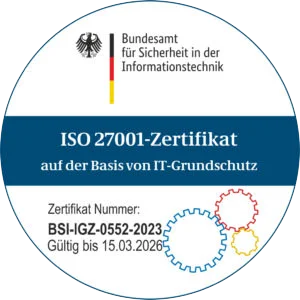
In our data centres in Hanover, Wolfsburg and Frankfurt, certified to ISO 27001 based on BSI IT-Grundschutz (BSI-IGZ-0552-2023). No CLOUD Act.
Sovereignty
Paving the way for digital sovereignty
-
Owner-managed since 1997
As an owner-managed operator with our own data centers, we make our decisions independently and are subject exclusively to German / EU law.
-
100% made in Germany
Our data center, product development, and customer support are all based in Germany for your digital sovereignty.
-
24/7 Customer Support
We are here for you: 24/7/365 customer support, in English and German
How big does the database need to be?
Tell us what runs on it — we will propose the arrangement.
- We will get back to you as soon as we can.
- No obligation, free of charge.